

Shimla Heritage Walk – One Day Tour of Shimla's Historic Heart
A Shimla Heritage Walk is one of the best ways to experience the historical, architectural and cultural character of Himachal Pradesh's famous hill capital. Instead of exploring Shimla only by car, a heritage walking tour allows you to slow down and discover the stories hidden behind its historic buildings, old streets, churches, theatres, colonial-era structures and traditional Himalayan surroundings.
Shimla, popularly known as the Queen of Hills, is much more than a hill station offering mountain views, pleasant weather and shopping on Mall Road. The city has a fascinating architectural and historical legacy shaped by the British colonial period, local Himalayan traditions, Indian culture and important events in the history of modern India.
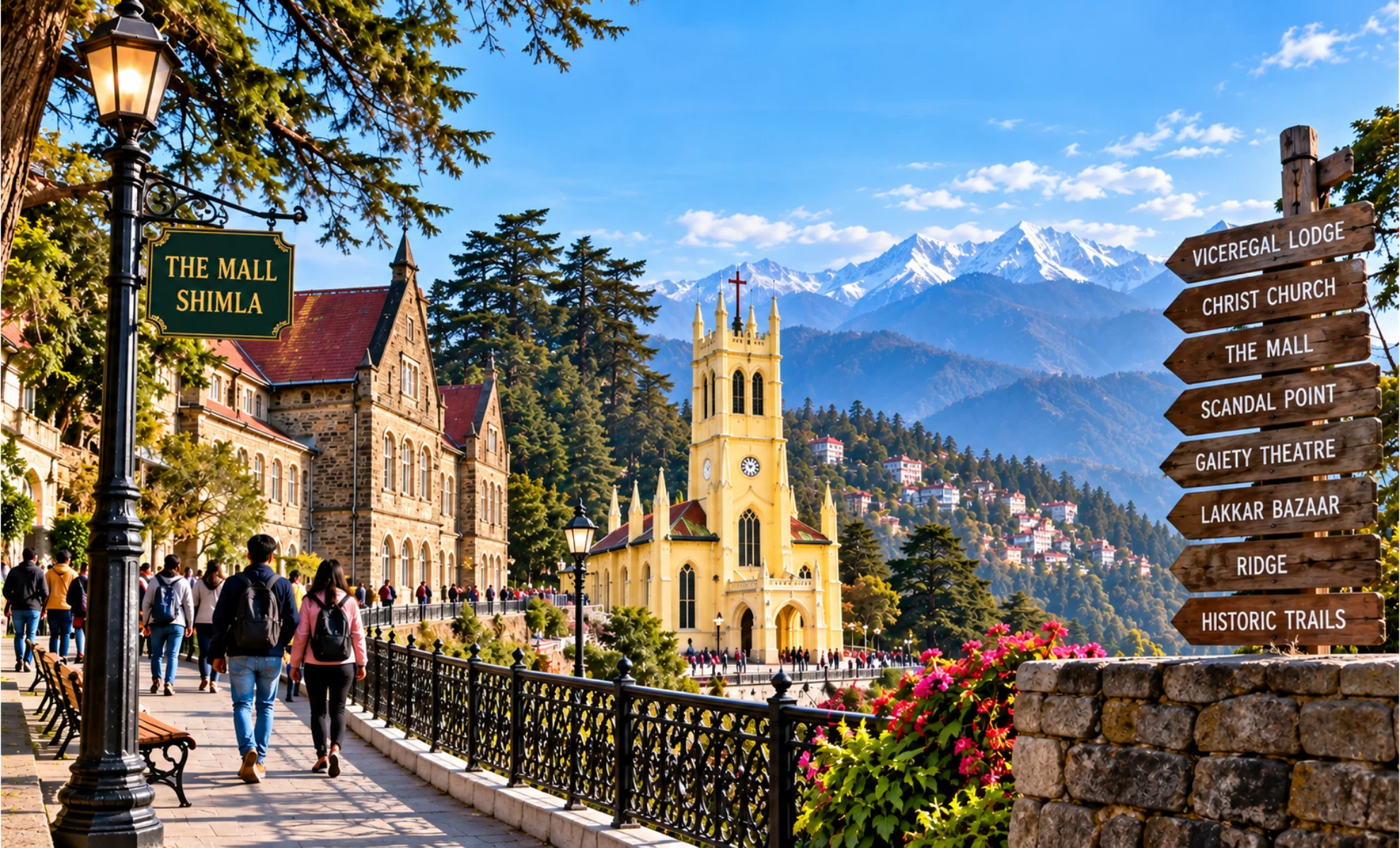
A one day Shimla Heritage Walk takes you through some of the city's most significant landmarks while allowing you to experience Shimla at a relaxed walking pace. The journey can include The Ridge, Christ Church, Mall Road, Scandal Point, Gaiety Theatre, Town Hall, historic colonial buildings, heritage streets and other important landmarks, depending on the selected route and opening conditions.
A heritage walk is particularly suitable for travellers who want to understand Shimla's history rather than simply photograph its tourist attractions.
You don't just see an old building. You learn why it was built, who used it, how Shimla developed around it and how the city became one of the most important hill stations of colonial India.
Why Choose a Shimla Heritage Walk?
Shimla can easily be explored through conventional sightseeing by car, but some of its most interesting heritage areas are best experienced on foot.
Walking through the historic centre gives you the opportunity to notice architectural details that are easily missed from a vehicle.
- Colonial architecture
- Neo-Gothic buildings
- Tudor-style structures
- Traditional Himalayan influences
- Historic churches
- Old government buildings
- Heritage hotels
- Theatre architecture
- Historic streets
- Old photographs and plaques
- Traditional shops
- Mountain views
- Local culture and everyday life
A Shimla Heritage Walk Tour also gives visitors a better understanding of how the town evolved from a small Himalayan settlement into the former summer capital of British India.
The Historical Story Behind Shimla
Shimla's heritage is closely connected with its transformation during the nineteenth century. The town developed as an important British hill station because of its pleasant mountain climate and strategic location.
Over time, colonial administrators, military officers, merchants and other residents constructed houses, government buildings, churches, hotels and public institutions across the hills.
This created a distinctive architectural landscape. Today, visitors can still see examples of the city's colonial heritage integrated into the modern urban environment.
The result is a fascinating combination of:
British colonial architecture + Himalayan landscape + Indian culture + local traditions.
This combination makes a Shimla Heritage Walk different from a conventional sightseeing tour.
Shimla – The Former Summer Capital
One of the most important elements of Shimla's historical identity is its association with the British administration.
The city became the summer capital of British India, and during that period Shimla developed a sophisticated administrative and social infrastructure.
Large colonial buildings, churches, residences, theatres and public institutions were constructed. The legacy of this period remains visible throughout the central part of Shimla.
Important examples include:
- Viceregal Lodge
- Christ Church
- Gaiety Theatre
- Town Hall
- Gorton Castle
- Railway heritage
- Historic hotels
- Colonial residences
- Heritage churches
- Old government buildings
One Day Shimla Heritage Walk Itinerary
A well-planned Shimla Heritage Walk itinerary should combine the city's major historical landmarks with enough time for photography, architecture appreciation and short breaks.
Suggested Duration
Approximately 6–8 hours
Suggested Walking Distance
The exact distance depends on the route and optional extensions.
Suggested Starting Point
The Ridge / Christ Church area
Suggested Ending Point
Mall Road / Scandal Point
For travellers staying outside central Shimla, the tour can be combined with local transportation to and from the walking zone.
8:00 AM – Start Your Shimla Heritage Walk
Start your day early to experience the historic centre before the busiest tourist period. Morning is an excellent time for a walking tour because the atmosphere around The Ridge and Mall Road can be more relaxed.
The cool mountain air, historic architecture and panoramic views create an ideal beginning for your one day Shimla Heritage Walk.
Before beginning, wear comfortable walking shoes and carry drinking water.
Stop 1 – The Ridge, Shimla
The Ridge – The Cultural Heart of Shimla
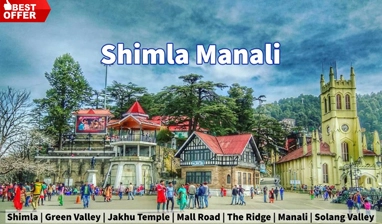
The Ridge is one of the most recognisable landmarks in Shimla and an essential starting point for a Shimla Heritage Walk.
The large open space runs alongside Mall Road and forms one of the city's principal public gathering areas. It is also surrounded by several important heritage landmarks.
The most prominent include:
- Christ Church
- Gaiety Theatre
- Town Hall
- State Library
- Historic buildings
- Statues and public spaces
What to See at The Ridge
During your heritage walk, take time to examine the architectural skyline. The Ridge is not simply an open tourist area. It is effectively an outdoor introduction to Shimla's architectural history.
Look towards: Christ Church → Gaiety Theatre → Town Hall → Historic Mall Road Buildings.
This creates an excellent visual representation of the evolution of Shimla's colonial centre.
Stop 2 – Christ Church Shimla
Christ Church – One of Shimla's Most Recognisable Heritage Landmarks
No Shimla Heritage Walk Tour is complete without visiting the iconic Christ Church.
Located prominently on The Ridge, Christ Church has become one of the defining symbols of Shimla.
The church was consecrated in 1857 and features Neo-Gothic architectural elements.
Architecture of Christ Church
- Neo-Gothic design
- Stone and brick construction
- Tall tower
- Stained-glass windows
- Nave
- Chancel
- Side aisles
- Traditional church interiors
Why Visit Christ Church?
For heritage travellers, Christ Church provides an opportunity to understand the religious and architectural history of colonial Shimla.
It is also one of the most photographed buildings in the city.
Stop 3 – Gaiety Heritage Cultural Complex
Gaiety Theatre – Shimla's Historic Cultural Stage
Continue your walking tour towards the Gaiety Heritage Cultural Complex.
Gaiety Theatre is an important part of Shimla's cultural and architectural heritage. The theatre forms part of the historic civic landscape around The Ridge and Mall Road.
For visitors interested in:
- Theatre
- Literature
- Colonial history
- Architecture
- Performing arts
- Cultural heritage
This is one of the most interesting stops on a Shimla historical walk.
Take some time to appreciate the building's façade and its relationship with the surrounding heritage structures.
Stop 4 – Shimla Town Hall
Town Hall and the Historic Mall Road
From Gaiety Theatre, continue along the historic pedestrian areas around Mall Road. The Town Hall forms part of the important architectural ensemble surrounding The Ridge and Mall.
This section of the walk is particularly enjoyable for visitors interested in British architecture in Shimla.
Rather than focusing on a single monument, look at the entire streetscape.
- Buildings follow the mountain terrain.
- Streets curve around the hillside.
- Historic structures stand alongside modern businesses.
- Balconies and roofs reflect different architectural influences.
- Commercial activity continues within heritage surroundings.
This is what makes a Shimla colonial heritage walk so interesting. The heritage is not confined to museums. It remains part of the living city.
Stop 5 – Mall Road Shimla
Walking Through Historic Mall Road
Mall Road is one of the most famous places to visit in Shimla. It is also an important part of a Shimla Heritage Walk itinerary.
A walking tour here allows you to experience two different sides of Shimla simultaneously.
One side is the historical city. The other is modern Shimla.
As you walk, look beyond the shops and restaurants.
- Old façades
- Heritage hotels
- Colonial windows
- Balconies
- Stonework
- Roof designs
- Historic signage
- Old streets
- Traditional shops
Stop 6 – Scandal Point
Scandal Point – Where History Meets Shimla's Social Life
Continue towards Scandal Point. This area is situated where The Ridge and Mall Road converge.
Today it is a popular meeting and photography point. For heritage travellers, however, it provides an opportunity to understand how Shimla's central public spaces evolved.
Take a short break here. Enjoy the mountain atmosphere. Observe the movement of tourists and locals, and then continue your historical exploration.
Stop 7 – St. Michael's Cathedral
St. Michael's Cathedral – French-Gothic Heritage
A Shimla heritage itinerary can also include St. Michael's Cathedral, depending on the selected walking route.
The cathedral was built in 1886 and represents another important religious architectural landmark in the city.
This provides an interesting architectural contrast with Christ Church.
Instead of viewing Shimla's heritage as a single architectural style, travellers can see how different European influences became part of the town's built environment.
Stop 9 – Shimla Heritage Museum
Explore Shimla's Architectural History
For travellers who want deeper historical context, the Shimla Heritage Museum can be an excellent addition.
The museum presents photographs, documents and artefacts connected with Shimla's heritage buildings and history.
This type of museum visit can transform the way you understand the walking tour.
Instead of simply seeing buildings, you begin connecting:
Building → People → Events → Architecture → History
That is the real value of a heritage walking tour.
Viceregal Lodge – A Major Chapter in Shimla's History
For travellers with more time, the Viceregal Lodge, now associated with the Indian Institute of Advanced Studies, is one of the most important heritage sites to include in an extended Shimla heritage itinerary.
It is located away from the immediate Ridge–Mall Road walking circuit, so it is better treated as a heritage extension requiring local transportation, rather than pretending it is part of a compact central walking loop.
The building was completed in 1888 and designed by architect Henry Irwin. Its Scottish castle-like appearance and historical importance make it one of the most significant heritage attractions in Shimla.
Why Viceregal Lodge Is Important
The site is significant because it connects Shimla's architectural heritage with major political events.
The building witnessed important discussions involving British administrators and Indian political leaders during the final years of British rule.
Viceregal Lodge is especially valuable for travellers interested in:
- Indian history
- British India
- Independence history
- Colonial architecture
- Political history
Understanding Shimla's Architectural Heritage
One of the major attractions of a Shimla Colonial Heritage Walk is the variety of architectural styles visible throughout the city.
Shimla's historic buildings reflect multiple influences.
Neo-Gothic Architecture
Christ Church provides one of the most recognisable examples.
Tudor and European Influences
Several old residences and hotels display European-inspired elements.
Scottish Influence
The Viceregal Lodge is a particularly prominent example of this architectural influence.
Himalayan Influences
Local building traditions, materials and adaptation to steep mountain terrain also influenced Shimla's architecture.
Why Shimla's Architecture Is Unique
The city's architecture had to respond to a challenging mountain environment. Buildings had to be constructed on steep slopes. Roofs needed to withstand mountain weather. Structures had to accommodate cold temperatures and seasonal precipitation.
As a result, Shimla developed a distinctive architectural identity.
This is why walking is such an effective way to understand the city. You can physically observe how buildings interact with the mountain landscape.
Kalka-Shimla Railway – A UNESCO World Heritage Connection
Shimla's heritage is not limited to buildings. Its railway history is equally important.
The Kalka–Shimla Railway is recognised as a UNESCO World Heritage mountain railway site.
The railway line was constructed between 1898 and 1903 and is famous for its remarkable engineering through the Himalayan mountains.
For visitors interested in engineering heritage, the railway provides another fascinating dimension to Shimla's history.
Baba Bhalku Railway Museum
The Baba Bhalku Railway Museum is another possible heritage stop. The museum is dedicated to the history of the Kalka–Shimla railway and Baba Bhalku.
This can be particularly interesting for:
- Railway enthusiasts
- Photographers
- Families
- History lovers
- Architecture enthusiasts
- Students
- Foreign tourists
Optional Heritage Extensions in Shimla
Himachal State Museum
Another possible extension is the Himachal State Museum, located in the Chaura Maidan area.
The museum is useful for visitors wanting to understand the wider cultural history of Himachal Pradesh beyond Shimla's colonial period.
Annandale and Army Heritage Museum
A heritage-focused Shimla itinerary can also be extended towards Annandale.
Annandale is an important historical recreational area and is home to the Army Heritage Museum.
The museum provides another perspective on Himachal Pradesh's association with India's military history.
Because Annandale is outside the compact Ridge–Mall Road pedestrian zone, it should be treated as a transportation-based extension rather than part of the core walking route.
Shimla Heritage Walk – Suggested Full-Day Schedule
8:00 AM – Start at The Ridge
Begin your day around The Ridge. Explore the open space and Himalayan views.
8:30 AM – Christ Church
Spend time appreciating the Neo-Gothic architecture and historical significance.
9:15 AM – Gaiety Heritage Cultural Complex
Explore the historic theatre and surrounding heritage architecture.
10:00 AM – Town Hall and Mall Road
Continue through the historic civic and commercial centre.
10:45 AM – Scandal Point
Take photographs and enjoy a short break.
11:15 AM – Heritage Buildings and Colonial Streets
Continue exploring the historic streets around central Shimla.
12:00 PM – St. Michael's Cathedral
Visit this important religious and architectural landmark if accessible.
12:45 PM – Lunch Break
Enjoy lunch at a suitable restaurant around the central Shimla area.
2:00 PM – Kali Bari Temple
Explore the cultural and religious heritage of Shimla.
3:00 PM – Heritage Museum / Additional Heritage Exploration
Depending on opening times, explore a heritage museum or continue the walking circuit.
4:00 PM – Heritage Photography Walk
Use the late afternoon for photography and relaxed exploration.
5:00 PM – Return to Mall Road / Ridge
Conclude the central walking section.
Best Time for Shimla Heritage Walk
A heritage walking tour can be enjoyed in different seasons, but the experience changes considerably throughout the year.
March to April
Spring brings pleasant conditions and relatively comfortable walking temperatures.
May to June
Summer is one of the busiest tourist periods. The weather can be pleasant compared with India's plains, but central Shimla can become crowded. Early morning walking is recommended.
July to September
The monsoon creates lush greenery around Shimla but can also bring rain. Visitors should carry rain protection and use caution on wet paths.
October to November
This can be an excellent period for photography and comfortable heritage exploration, with crisp mountain air and changing seasonal landscapes.
December to February
Winter provides the possibility of experiencing Shimla's famous cold weather and, during suitable conditions, snowfall. However, snow and ice can make walking surfaces slippery. Proper footwear is essential.
What to Wear for a Shimla Heritage Walk
A comfortable heritage walk depends heavily on appropriate clothing and footwear.
Recommended:
- Comfortable walking shoes
- Light jacket
- Warm layers during winter
- Rain jacket during monsoon
- Sunglasses
- Sunscreen
- Water bottle
- Small backpack
- Camera/mobile phone
- Personal medicines if required
Avoid uncomfortable footwear. Shimla's roads and pedestrian pathways include slopes and steps, so comfortable shoes are much more important than fashionable footwear.
Who Should Take a Shimla Heritage Walk?
Shimla Heritage Walk for Families
Families can enjoy the walking tour because it combines history, architecture, photography, sightseeing, shopping and local culture.
Shimla Heritage Walk for Couples
Couples can enjoy a slower and more atmospheric way of experiencing Shimla. The historic buildings, mountain views, cafés and old streets provide numerous opportunities for photography.
Shimla Heritage Walk for History Lovers
History enthusiasts will particularly appreciate:
- British-era architecture
- Viceregal history
- Indian independence connections
- Historic churches
- Railway heritage
- Colonial institutions
- Museums
Shimla Heritage Walk for Photographers
Shimla is an excellent destination for architectural photography.
- Gothic towers
- Old stone buildings
- Wooden balconies
- Mountain streets
- Historic façades
- Himalayan landscapes
- Heritage hotels
- Old churches
- Railway architecture
Shimla Heritage Walk vs Normal Shimla Sightseeing
Why a Walking Tour Is Different
A normal Shimla sightseeing tour usually focuses on reaching multiple tourist attractions by vehicle. A heritage walk has a different objective.
Conventional Sightseeing
Drive → Stop → Photograph → Leave
Heritage Walking Tour
Walk → Observe → Learn → Photograph → Understand → Continue
This difference is important. A heritage walk encourages travellers to notice details that they might otherwise miss.
Top Heritage Places Covered in Shimla Heritage Walk
Depending on the selected itinerary and access conditions, a Shimla Heritage Walk can include:
- The Ridge
- Christ Church
- Gaiety Heritage Cultural Complex
- Town Hall
- Mall Road
- Scandal Point
- St. Michael's Cathedral
- Kali Bari Temple
- Shimla Heritage Museum
- Historic colonial buildings
- Heritage hotels
- Viceregal Lodge
- Indian Institute of Advanced Studies
- Kalka–Shimla Railway heritage
- Baba Bhalku Railway Museum
- Annandale
- Army Heritage Museum
- Himachal State Museum
The exact combination should be adapted according to opening hours, walking ability, weather and the traveller's interests.
Why Book a Private Shimla Heritage Walk?
A professionally planned heritage walk can make the experience significantly easier.
A local travel expert can help with:
- Route planning
- Timing
- Local transportation
- Historical context
- Photography stops
- Restaurant recommendations
- Weather adjustments
- Accessibility considerations
- Combining the walk with other Shimla sightseeing
For travellers staying only one day in Shimla, good planning is especially important. You don't want to spend the entire day moving between attractions.
You want to spend your time experiencing Shimla.
Shimla Heritage Walk for One Day – Perfect for Short-Stay Travellers
If you have only one day in Shimla, a heritage walking tour can provide a highly efficient introduction to the city.
Instead of trying to cover every attraction around Shimla, concentrate on the historic centre.
A well-designed one day Shimla Heritage Walk gives you a combination of:
History + Architecture + Culture + Photography + Local Experience + Sightseeing
This makes it particularly suitable for travellers visiting Shimla as part of:
- Shimla Manali Tour
- Himachal Pradesh Tour
- Chandigarh Shimla Tour
- Delhi Shimla Tour
- Shimla Weekend Trip
- Shimla Honeymoon
- Family Vacation
- North India Holiday
- Himachal Sightseeing Tour
Frequently Asked Questions About Shimla Heritage Walk
What is a Shimla Heritage Walk?
A Shimla Heritage Walk is a guided or self-guided walking tour through the historic areas of Shimla, focusing on colonial architecture, heritage buildings, churches, theatres, public spaces, cultural landmarks and important historical locations.
How long does a Shimla Heritage Walk take?
A basic central walking route can take several hours, while a comprehensive one-day heritage experience can take approximately 6–8 hours depending on stops, photography, meals, museums and optional extensions.
What places are covered in Shimla Heritage Walk?
Common highlights include The Ridge, Christ Church, Gaiety Theatre, Town Hall, Mall Road and Scandal Point. Additional heritage sites such as Kali Bari Temple, St. Michael's Cathedral, heritage museums and Viceregal Lodge can be added depending on the itinerary.
Is Shimla Heritage Walk suitable for families?
Yes. Families who enjoy history, architecture and sightseeing can find the experience highly rewarding. However, visitors should remember that Shimla is a hill city with slopes, stairs and uneven walking sections.
Is Shimla Heritage Walk suitable for senior citizens?
It can be, but the route should be customised. A shorter route with more breaks and local transportation between distant attractions may be more comfortable.
What is the best time for Shimla Heritage Walk?
Morning is generally a good time for walking because temperatures are usually comfortable and popular central areas may be less crowded than later in the day. Seasonally, spring, autumn and suitable summer days can provide comfortable walking conditions.
Can Viceregal Lodge be included?
Yes. However, Viceregal Lodge is away from the central Ridge–Mall Road walking circuit, so it is better included as a transportation-assisted extension.
Can I do Shimla Heritage Walk without a guide?
Yes. However, a guide or knowledgeable local travel expert can provide historical context that is difficult to obtain simply by walking between attractions.
Is Shimla Heritage Walk available in winter?
Yes. Winter can create a beautiful atmosphere, particularly when Shimla receives snowfall. However, visitors should be prepared for cold temperatures and potentially slippery surfaces.
Can I combine Shimla Heritage Walk with Shimla sightseeing?
Absolutely. A heritage walk can be combined with selected attractions such as Jakhoo Temple, Indian Institute of Advanced Studies, Annandale or other places depending on available time.
Experience the Real Shimla Through a Heritage Walk
Shimla is not just a destination for mountain views, snowfall, shopping and cafés. It is a city where history can still be seen in its streets, buildings, churches, theatres, railway heritage and public spaces.
A Shimla Heritage Walk gives travellers an opportunity to experience this history at a much deeper level.
From the iconic Christ Church on The Ridge to the historic Gaiety Theatre, from the lively Mall Road to Scandal Point, from traditional religious landmarks to colonial architecture, every part of the walk reveals another chapter of Shimla's story.
For travellers interested in India's colonial history, Himalayan architecture, photography, culture and local experiences, a one day Shimla Heritage Walk can be one of the most memorable ways to explore the Queen of Hills.
Instead of simply visiting Shimla, walk through its history, discover its architecture and experience the stories that shaped this remarkable Himalayan town.
How to Reach Shimla
- By Road: Well connected from Delhi & Chandigarh
- By Train: Kalka–Shimla toy train (UNESCO World Heritage)
- By Air: Nearest airport is Chandigarh
Explore Shimla Beyond Conventional Sightseeing
A heritage walking tour encourages travellers to notice details that they might otherwise miss during conventional sightseeing. Instead of simply travelling from one attraction to another, visitors can understand the relationship between Shimla's historic buildings, mountain landscape, colonial past, religious traditions and modern city life.
Whether you are planning a Shimla Heritage Walk, a one day Shimla sightseeing tour, a Shimla historical tour or a larger Himachal Pradesh holiday, exploring Shimla on foot can provide a much richer understanding of the Queen of Hills.
Why Travelers Trust The Thrill Himalaya
- Himachal-based tour operator with local expertise
- Operating Shimla & Manali tours since 2016
- Experienced local drivers and registered vehicles
- Transparent pricing & no hidden charges
- 24×7 on-trip support for safety and convenience
- Hundreds of satisfied travelers every year
Our Office Location
The Thrill Himalaya
Suite No.02, Himachal Auto Service, Above PNB Bank, Sanjauli, Shimla – 171006+91 78310 50555 +91 98163 50555 thethrillhimalaya@gmail.com
Explore customized Himachal Pradesh tour packages covering Shimla, Manali, Kinnaur, Spiti Valley, Dharamshala, Dalhousie, Tirthan Valley, Jibhi, Kasol and other beautiful Himalayan destinations.
I'am Interested! Please tell me the Best Offer!!
Explore Shimla Beyond the Ordinary
All Of Our Tours Are Popular But Some Are Really Spectacular