

Spiti Valley Winter 4X4 SUV Tour Package
7 Nights / 8 Days | Private 4X4 SUV | Ex-Delhi / Chandigarh / Shimla
Discover the spectacular winter landscapes of Kinnaur and Spiti — from Narkanda and Chitkul to Nako, Tabo, Kaza, Langza and Kalpa.
Enquire for Dates & Best PriceSpiti Valley Winter 4X4 SUV Expedition – At a Glance
*The published base rates below are stated for 6 passengers travelling together, with GST extra. The exact vehicle model, confirmed 4WD variant, legal seating capacity, luggage allowance, pickup / drop arrangement, hotel names, room category and winter equipment must be confirmed in the written quotation. Do not make payment until the final inclusions and total payable amount are documented.
At a Glance: The Kinnaur–Spiti Winter Route
A route overview for planning only. Actual road access, sightseeing and overnight stops depend on current winter conditions and local instructions.
Route format: Shimla–Kinnaur approach into Spiti, returning through Kinnaur to Shimla. The Manali–Kunzum route is not used for this winter itinerary.
Explore the remote beauty of the Himalayan cold desert on a private Spiti Valley winter road trip. Travel through the scenic Kinnaur region, discover ancient Buddhist monasteries, visit traditional high-altitude villages and experience the extraordinary winter landscapes of Spiti with The Thrill Himalaya.
Spiti Valley Winter 4X4 SUV Tour – Discover the White Desert of the Himalayas
Hidden in the Trans-Himalayan region of Himachal Pradesh, Spiti Valley is one of India's most remarkable mountain destinations. Its dramatic barren mountains, deep river valleys, ancient Buddhist monasteries and traditional villages create a landscape unlike the forested hill stations of the lower Himalayas. In winter, snow can transform the high-altitude settlements and surrounding mountains into a striking white landscape.
This Spiti Valley Winter 4X4 SUV Tour Package follows the Shimla–Kinnaur approach, travelling from Narkanda through Sangla, Chitkul, Nako and Tabo before reaching Kaza. The return journey passes through Kalpa and Shimla. The route is designed to showcase the contrast between the wooded slopes of Kinnaur and the stark, high-altitude cold desert of Spiti.
Who this 4X4 tour is for: This page is specifically for travellers seeking a private SUV with the four-wheel-drive variant confirmed in writing, a dedicated driver and a flexible 8-day Kinnaur–Spiti circuit. For a broader overview of seasonal itineraries and other transport options, see our Spiti Valley winter tour packages.
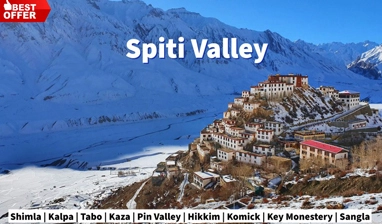
Along the way, discover the heritage of Tabo and Dhankar monasteries, the iconic Key Monastery, the villages of Kibber, Langza, Komic and Hikkim, and the spectacular Chicham Bridge. Each destination offers a different perspective on Himalayan culture, landscape and life in remote mountain communities.
The winter season also brings real travel challenges. Temperatures can fall far below freezing, roads may be affected by snowfall or ice, and some hotels, restaurants and village services may operate on a limited basis. Our itinerary is therefore planned as a flexible winter expedition, not a promise that every road or sightseeing point will be accessible on every date.
Spiti Valley Winter Tour – Major Highlights

Key Monastery
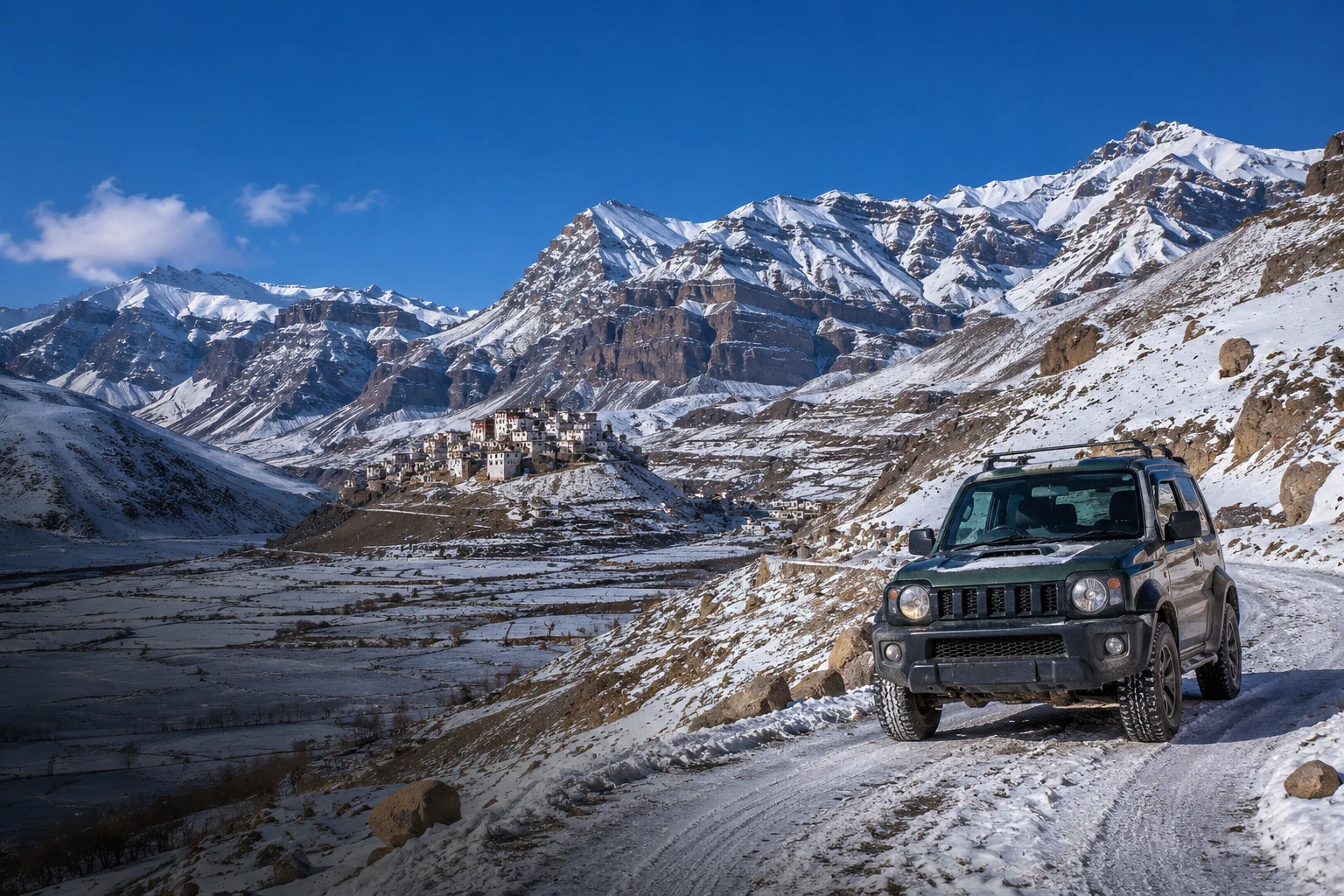
Key Monastery – the iconic hilltop monastery of Spiti.

Chicham Bridge
Chicham Bridge – a dramatic gorge crossing near Kibber.

Dhankar Monastery
Dhankar Monastery – perched above the Spiti Valley.

Sangla Valley
Sangla Valley – the scenic Baspa Valley.

Langza
Langza – the iconic Buddha statue and fossil village.

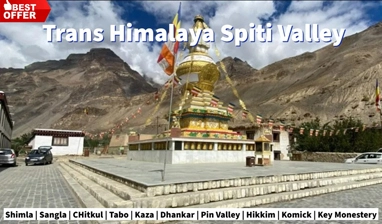
Tabo Monastery
Tabo Monastery – an important Himalayan Buddhist heritage site.
Destination photographs are illustrative. Snowfall, road access and the appearance of each location vary with weather and travel dates.
Why Choose a 4X4 SUV for a Spiti Valley Winter Road Trip?
A suitable four-wheel-drive SUV can provide additional traction on certain loose, uneven or snow-affected surfaces when the road is open and permitted for travel. Ground clearance, tyre condition, suitable winter equipment and an experienced mountain driver are all important considerations for a winter journey through Kinnaur and Spiti.
- Additional traction: Four-wheel drive can help distribute drive to more than two wheels on suitable surfaces.
- Mountain-road suitability: An appropriate SUV can be useful on uneven village approach roads and rough sections.
- Private travel: A dedicated vehicle gives your group flexibility for agreed stops and sightseeing.
- Itinerary coordination: The day's plan can be adjusted around daylight, road status and weather.
- Driver experience: A driver familiar with Himalayan routes is essential for winter mountain travel.
Potential vehicle options may include a Maruti Suzuki Jimny 4WD, Mahindra Scorpio-N 4WD or another suitable vehicle, subject to availability and the specific variant. Not every variant of a model is four-wheel drive. The exact model, legal passenger capacity, luggage allowance and drivetrain must be confirmed in writing.
What to Confirm About Your 4X4 SUV Before Booking
| Vehicle detail | What The Thrill Himalaya will confirm in your quotation |
|---|---|
| Vehicle make and model | The actual vehicle assigned for your travel dates, not simply a model name used as an example. |
| Drivetrain | Whether the specific vehicle variant is genuine 4WD / 4X4. A model name alone does not establish its drivetrain. |
| Passenger capacity | Legal seating capacity and the number of travellers the vehicle can carry comfortably on this route. |
| Luggage allowance | Practical luggage capacity for your group. Large suitcases may reduce available passenger or boot space. |
| Tyres and winter equipment | Tyre condition and the winter traction equipment actually available and appropriate for the planned route. |
| Driver and route planning | Driver assignment, daily driving plan and how the itinerary will be adjusted if road or weather conditions change. |
7 Nights / 8 Days – Detailed Spiti Valley Winter 4X4 SUV Tour Itinerary
This itinerary follows the proposed route and 7-night overnight pattern. Distances and timings are indicative. Winter conditions may require changes to sightseeing, overnight stops or the route. The 8-day version includes several long driving days; travellers with flexible dates should request a 9 Nights / 10 Days version with an additional weather / road contingency night and a more relaxed sightseeing schedule. The extra night, revised route and revised price must be confirmed in the quotation; it is not included in the displayed 7-night rate.
Day 01: Delhi / Chandigarh / Shimla – Narkanda

Route: Delhi / Chandigarh / Shimla – Narkanda.
Your winter expedition begins with pickup from the confirmed starting point. Guests departing from Delhi travel via Chandigarh and Shimla; guests from Chandigarh follow the mountain highway towards Shimla; and guests starting from Shimla proceed directly towards Narkanda.
As the road climbs through the lower Himalayas, the scenery changes to forested slopes, mountain settlements and open viewpoints. Narkanda is a scenic hill destination known for its apple-growing region, surrounding forests and winter atmosphere. Snowfall is possible during the winter season but cannot be guaranteed on a particular date.
On arrival, check in to your hotel and relax. If time, weather and road conditions permit, enjoy a short local walk or explore the accessible surroundings before returning to the hotel.
Overnight stay: Narkanda.
Day 02: Narkanda – Sangla / Chitkul
Route: Narkanda – Rampur – Karcham – Sangla – Chitkul (subject to access).
After breakfast, depart for Kinnaur. The route descends towards the Sutlej valley and continues through Rampur and the mountain corridor towards Karcham. From here, the road turns into the beautiful Baspa Valley, leading to Sangla.
Sangla is known for its traditional Kinnauri architecture, apple orchards, river scenery and dramatic mountain backdrop. If the road is open, safe and accessible within available daylight, continue towards Chitkul, the well-known village near the upper end of the Baspa Valley. Explore the village surroundings and enjoy the mountain views without approaching restricted areas.
If snowfall, ice or local restrictions make the Chitkul approach unsuitable, sightseeing will be limited to accessible parts of Sangla and the overnight stay will be arranged at Sangla or another confirmed safe location.
Overnight stay: Sangla / Chitkul, as confirmed according to access and accommodation availability.
Day 03: Sangla / Chitkul – Nako – Gue Monastery – Tabo

Route: Sangla / Chitkul – Reckong Peo – Pooh – Khab – Nako – Gue – Tabo.
After an early breakfast, begin the journey towards the Spiti region. This is a long mountain travel day. The landscape changes from the greener Baspa Valley to the dramatic rock faces, deep river gorges and high-altitude terrain of Kinnaur and Spiti.
Stop at Nako, a traditional high-altitude village known for its monastery, village lanes and lake. In very cold weather the lake may develop an icy surface, but conditions vary. Enjoy the view from safe ground; do not walk onto frozen water.
Continue towards Gue, known for its monastery and the shrine associated with the naturally preserved mummy of a Buddhist monk. The visit depends on road access and local opening arrangements. Proceed to Tabo and check in to your accommodation.
Because of the distance and winter daylight, the driver may adjust the duration of stops. If conditions deteriorate or the road is delayed, the itinerary may need to be modified rather than attempting to drive after dark.
Overnight stay: Tabo.
Day 04: Tabo – Dhankar – Kaza
Route: Tabo – Dhankar – Kaza.
After breakfast, explore Tabo Monastery, a major Buddhist heritage site renowned for its historic murals, sculptures and monastic tradition. Visitors should follow local instructions regarding entry, photography and access to protected interiors.
Continue towards Dhankar, an historic settlement positioned above the confluence of the Spiti and Pin rivers. Subject to safe road access, visit the monastery and enjoy the dramatic views across the valley. The Dhankar Lake trek is not included in this winter vehicle itinerary; snow and ice can make the trail hazardous.
Proceed to Kaza, the administrative centre of Spiti Valley. On arrival, check in to your hotel or winter-operational homestay. Keep the evening relaxed to allow time to rest and adapt to the higher altitude.
Overnight stay: Kaza.
Day 05: Kaza – Key Monastery – Kibber – Chicham Bridge – Langza – Komic – Hikkim – Kaza
Route: Kaza – Key – Kibber – Chicham – Langza – Komic – Hikkim – Kaza, subject to road access.
After breakfast, set out for the planned sightseeing circuit around Kaza. Begin with Key (Ki) Monastery, one of Spiti's best-known Buddhist monasteries, dramatically located above the Spiti River valley. Continue towards Kibber, a traditional high-altitude village known for its distinctive settlement pattern and mountain surroundings.
If the approach is open and safe, continue to Chicham Bridge, which spans a deep gorge and connects the remote villages on either side. The bridge and surrounding landscape provide memorable views, but the visit must follow local road and safety instructions.
In the afternoon, the proposed route continues towards Langza, known for its giant Buddha statue and fossil-bearing geological landscape; Komic, a remote high-altitude village with Buddhist heritage; and Hikkim, famous for its post office. The post office's opening and services are not guaranteed during severe winter weather.
Winter access note: This is an ambitious full-day circuit at high elevation. Snow, ice, road closures, limited daylight or vehicle restrictions may make it impossible to visit every village. The driver and local authorities' advice take priority. The sightseeing order may change, and inaccessible stops will be skipped. Return to Kaza before dark whenever conditions allow.
Overnight stay: Kaza.
Day 06: Kaza – Tabo – Nako – Khab – Reckong Peo – Kalpa

Route: Kaza – Tabo – Nako – Pooh – Khab – Reckong Peo – Kalpa.
After breakfast, check out and begin the return journey towards Kinnaur. Retrace the route through Tabo and Nako, continuing past the dramatic river and mountain landscapes towards Reckong Peo and Kalpa.
This is a long winter driving day. Stops will be planned according to road conditions, daylight and the availability of safe places to pause. On reaching Kalpa, check in to your accommodation. If the weather is clear, the village may offer beautiful views of the Kinner Kailash range.
Overnight stay: Kalpa.
Day 07: Kalpa – Rampur – Narkanda – Shimla
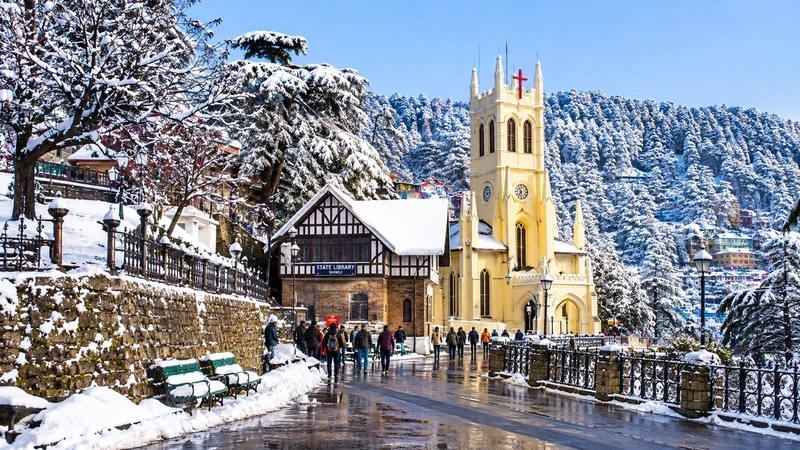
Route: Kalpa – Reckong Peo – Rampur – Narkanda – Shimla.
Enjoy the mountain surroundings in the morning, subject to visibility. After breakfast, depart for Shimla through the Kinnaur and Sutlej valley road corridor. The route passes through mountain settlements and forested slopes before reaching Narkanda and continuing to Shimla.
On arrival, check in to your hotel. If time and traffic permit, enjoy a short visit to the accessible parts of Shimla before returning to the hotel.
Overnight stay: Shimla.
Day 08: Shimla – Chandigarh / Delhi | Tour Ends
Route: Shimla – Chandigarh / Delhi.
After breakfast, check out and begin the return journey to your selected drop-off point. Guests travelling to Chandigarh continue through the lower Himalayan highway; guests travelling to Delhi proceed further via Chandigarh. Arrival time depends on traffic, road conditions, weather and rest stops.
Your 7 Nights / 8 Days Spiti Valley Winter 4X4 SUV expedition concludes with memories of Kinnaur's mountain scenery, Spiti's ancient monasteries and the remarkable high-altitude villages of the cold desert.
Tour ends: Chandigarh / Delhi.
Spiti Valley Winter Tour – Day-wise Distance & Driving Time
| Day | Route | Indicative distance | Indicative driving time | Night halt |
|---|---|---|---|---|
| 1 – Ex-Delhi | Delhi – Chandigarh – Shimla – Narkanda | Approx. 420–450 km | Approx. 10–12 hours, excluding long breaks | Narkanda |
| 1 – Ex-Chandigarh | Chandigarh – Shimla – Narkanda | Approx. 180–200 km | Approx. 5–7 hours | Narkanda |
| 1 – Ex-Shimla | Shimla – Narkanda | Approx. 60–65 km | Approx. 2–3 hours | Narkanda |
| 2 | Narkanda – Rampur – Karcham – Sangla / Chitkul | Approx. 150–180 km to Sangla; more to Chitkul | Approx. 6–8 hours | Sangla / Chitkul |
| 3 | Sangla / Chitkul – Nako – Gue – Tabo | Approx. 180–220 km | Approx. 8–10 hours or longer | Tabo |
| 4 | Tabo – Dhankar – Kaza | Approx. 50–70 km, excluding local detours | Approx. 3–5 hours plus sightseeing | Kaza |
| 5 | Kaza – Key – Kibber – Chicham – Langza – Komic – Hikkim – Kaza | Approx. 70–100 km, depending on stops and route | Flexible full-day sightseeing | Kaza |
| 6 | Kaza – Tabo – Nako – Reckong Peo – Kalpa | Approx. 190–220 km | Approx. 8–10 hours or longer | Kalpa |
| 7 | Kalpa – Rampur – Narkanda – Shimla | Approx. 220–230 km | Approx. 8–10 hours | Shimla |
| 8 | Shimla – Chandigarh | Approx. 110–120 km | Approx. 3–4 hours | Tour ends |
| 8 | Shimla – Delhi | Approx. 350–370 km | Approx. 7–9 hours | Tour ends |
Distances and times are indicative planning estimates, not guaranteed timings. Actual distance depends on the exact hotel and sightseeing access. Snowfall, ice, road restrictions, traffic, roadworks and clearance operations can substantially increase journey time. Day 1 from Delhi, Day 3, Day 6 and Day 7 are long travel days; consider a buffer day if your travel dates and budget allow.
Destination Guide – Places Covered on Your Kinnaur & Spiti Winter Tour
This guide focuses on the places included in the proposed 4X4 winter route. The highlights gallery above provides the page’s visual overview; the destination descriptions below add route-specific context without repeating the same photographs.
Narkanda – The Himalayan Winter Gateway
Narkanda is a mountain town in the Shimla district, surrounded by forests, orchards and Himalayan views. Its higher setting makes it a popular stop for travellers heading towards Kinnaur. Winter may bring snowfall and cold conditions, but snow cover varies each season. Hatu Peak and other higher approaches should only be considered when the road or trail is open and safe.
Sangla Valley – The Beautiful Baspa Valley
Sangla lies in the Baspa Valley of Kinnaur and is known for its river scenery, traditional architecture, orchards and mountain backdrop. It is a natural overnight base on the route towards Chitkul. During winter, the valley can be very cold and local road conditions may change after snowfall.
Chitkul – A Famous Village in the Baspa Valley
Chitkul is a well-known village in the upper Baspa Valley, recognised for its traditional houses and dramatic mountain setting. It is often described in tourism material as the last inhabited village on this road towards the border region. The approach can be affected by snow, ice and local restrictions, so the itinerary includes Sangla as a practical alternative.
Nako Village & Lake
Nako is a high-altitude village known for its traditional settlement, monastery and lake. The lake may freeze in very cold weather, creating a distinctive winter scene. Ice conditions are unpredictable and visitors should remain on safe ground rather than walking onto the frozen surface.
Gue Monastery – The Mummy Shrine
Gue is known for its monastery and the shrine associated with the naturally preserved mummy of a Buddhist monk. It is a distinctive cultural stop on the Kinnaur–Spiti route. Access to the shrine depends on road conditions and local opening arrangements.
Tabo Monastery – The Ajanta of the Himalayas
Tabo Monastery is an important Buddhist heritage complex, established in 996 CE and renowned for its murals, sculptures and historic monastic buildings. It is one of the most significant cultural attractions in Spiti. Follow local instructions for photography and access to the interiors.
Dhankar – Monastery Above the Spiti Valley
Dhankar is a historic village dramatically positioned above the confluence of the Spiti and Pin rivers. Its monastery and surrounding views make it a memorable stop between Tabo and Kaza. The Dhankar Lake trek is not included in this winter vehicle tour and should only be considered with current local confirmation that the trail is safe.
Kaza – The Heart of Spiti Valley
Kaza is the administrative centre and main base for exploring the central Spiti region. It sits at high altitude and offers access to Key Monastery, Kibber, Chicham, Langza, Komic and Hikkim. Winter services can be limited; confirm accommodation, meals, heating, fuel and other essentials before departure.
Key (Ki) Monastery
Key Monastery is one of Spiti's best-known Buddhist monasteries, perched above the Spiti River valley. Its distinctive architecture and hilltop setting make it a major highlight of the Kaza region. Visiting arrangements and road access should be checked locally.
Kibber Village
Kibber is a high-altitude village known for its traditional settlement and mountain landscape. The wider area is associated with Himalayan wildlife, including snow leopard habitat. A standard sightseeing visit does not guarantee wildlife sightings; specialist wildlife tracking requires separate planning and local expertise. Add a genuine Kibber photograph to the destination image folder to display it here; the page will not substitute a Key Monastery photograph.
Chicham Bridge
Chicham Bridge spans a deep gorge and connects remote settlements near Kibber. Its dramatic location makes it a popular photography stop. The approach road can be affected by snow and ice, so the visit is conditional on safe access.
Langza – The Buddha Statue & Fossil Village
Langza is known for its giant Buddha statue overlooking the village and for fossil-bearing geological formations. Its high-altitude location offers expansive views across the cold desert landscape. Visitors should not remove fossils or geological material from protected or restricted areas.
Komic – A Remote High-Altitude Village
Komic is a remote settlement recognised for its high-altitude location, traditional houses and Buddhist heritage. The road may become difficult or inaccessible during heavy snowfall. The visit is planned only when safe vehicle access is confirmed.
Hikkim – The Famous Post Office
Hikkim is widely known for its post office and remote village setting. When the post office is open, visitors may be able to purchase postcards and send mail. Opening and road access are not guaranteed during severe winter conditions.
Kalpa – Views of the Kinner Kailash Range
Kalpa is a beautiful Kinnaur village known for its traditional architecture, orchards and views of the Kinner Kailash range. It provides a peaceful overnight stop on the return journey from Spiti. Clear morning conditions can offer memorable mountain views.
Complete Spiti Valley Winter Travel Guide
Best Time to Visit Spiti Valley in Winter
The winter experience generally extends from November to March, but the amount of snowfall and road accessibility vary from year to year. December, January and February are typically the coldest part of the season. Travellers should choose dates with flexibility and avoid treating any month as a guarantee of fresh snowfall or access to every village.
| Month | General seasonal character | Travel planning |
|---|---|---|
| November | Transition into winter; cold nights and possible early snow at higher elevations. | Check road and accommodation operations. |
| December | Cold conditions; snowfall may affect high villages and roads. | Allow flexibility for road clearance and shorter daylight. |
| January | Deep winter and potentially severe sub-zero temperatures. | Confirm operational stays, heating and route status. |
| February | Continued deep-winter conditions; snow and ice may persist. | Expect possible village-road restrictions. |
| March | Seasonal transition, while higher locations may remain wintry. | Check local access and weather shortly before departure. |
Which Route Is Used to Reach Spiti Valley in Winter?
This itinerary uses the Shimla–Kinnaur approach through Narkanda, Rampur, Kinnaur, Nako and Tabo. The Manali–Kunzum Pass route is generally closed during winter because of heavy snowfall at the high mountain pass. Even the Shimla–Kinnaur corridor can experience temporary closures, restrictions or delays. Always check the latest district administration and road-authority updates before departure and follow official instructions.
Expected Winter Temperatures & Altitude Awareness
Spiti is a high-altitude cold desert. Kaza is around 3,800 metres above sea level, while the villages of Langza, Komic and Hikkim are higher still. Temperatures vary by month, weather and exposure; severe sub-zero nights are possible. Do not rely on a generic table as a forecast. Check a reliable forecast for the exact dates and pack for extreme cold.
Winter Accommodation in Kinnaur & Spiti
The proposed overnight pattern is one night in Narkanda, one night in Sangla or Chitkul, one night in Tabo, two nights in Kaza, one night in Kalpa and one night in Shimla. Hotels and homestays in remote villages may close or reduce services during deep winter. The exact property, room category, meal plan and facilities must be confirmed in writing before payment.
Ask specifically about room heating, hot water, winter bedding, power backup, meal availability, parking, access road and whether the property is operating on your travel dates. Do not assume that a geyser or room heater is available unless the hotel confirms it.
What to Pack for a Spiti Winter Road Trip
- Thermal base layers, fleece and insulated outer jacket.
- Windproof and waterproof outerwear.
- Warm trousers, woollen socks, insulated gloves and winter shoes with good grip.
- Warm cap, neck warmer and sunglasses with UV protection.
- Personal prescription medicines and a basic first-aid kit.
- Power bank, charging cables, camera batteries and offline maps.
- Valid identification, cash and copies of booking confirmations.
- Reusable water bottle, sunscreen and personal toiletries.
- Travel insurance that specifically covers high-altitude travel and emergency evacuation, if available.
Mobile Network, Internet & Cash
Mobile connectivity varies by village, operator and local infrastructure. Do not rely on continuous Jio, Airtel or BSNL service throughout the route. Download offline maps, keep key contact details available offline and tell family members that connectivity may be interrupted. Carry sufficient cash because ATM availability, electricity and digital payment connectivity may be limited in remote settlements.
Fuel, Food & Essential Services
Fuel stations, restaurants, pharmacies and other services are limited in remote areas and may operate on reduced schedules during winter. The driver and tour coordinator should confirm fuel planning and available services before departure. Carry personal medicines and essential supplies rather than assuming that every item can be purchased en route.
Responsible Travel in Spiti
- Respect monasteries, religious practices and local customs.
- Do not litter; carry waste back to appropriate disposal points.
- Do not walk on frozen lakes or rivers.
- Do not disturb wildlife or attempt to approach wild animals.
- Do not collect fossils or geological specimens from protected areas.
- Follow road closures, police instructions and local safety advice.
- Support local homestays and businesses where practical.
Spiti Valley Winter 4X4 SUV Tour Package Cost
Published base rates for the 7 Nights / 8 Days itinerary are shown below. These rates are quoted per person for a group of 6 passengers travelling together. GST is additional.
Ex-Delhi / Chandigarh
Per person · group of 6 · GST extra
Ex-Shimla
Per person · group of 6 · GST extra
What the published rate means: The stated amount is a base per-person rate for the group size and itinerary described on this page, not a guaranteed final invoice for every group. Smaller or larger groups, different travel dates, room occupancy, vehicle availability, changes to pickup / drop, extra buffer nights and supplier changes can alter the quotation.
Meals and transfers: The package is described on MAP basis (breakfast and dinner). The listed Delhi-origin inclusions refer to Volvo transfers between Delhi and Shimla; the private 4X4 sightseeing / transfer itinerary operates from Shimla as specified. The exact Chandigarh pickup / drop and all transport segments must be written into the quote.
Before paying, obtain a written breakup of: base package price, GST, transport segments, assigned vehicle and confirmed 4WD variant, passenger and luggage capacity, hotel names / room category, meal plan, guide / permit arrangements, exclusions, cancellation terms and total payable amount.
Check Current Price & Availability Call UsRates are based on 6 passengers travelling together in a 4X4 SUV; GST is extra. Package meals are stated on MAP basis (breakfast and dinner). No price-validity date is published here; request a dated written quotation before booking. Vehicle allocation and final inclusions are subject to written confirmation.
Get a Customised Spiti Winter 4X4 Tour Quotation
Share your travel details. The form prepares a WhatsApp enquiry with your requirements; it does not make a booking or payment.
Spiti Valley Winter 4X4 SUV Tour Package – Inclusions
- Volvo tickets from Delhi to Shimla and return to Delhi (for the Delhi-origin package).
- 07 nights’ accommodation on single / double / triple sharing basis in hotels, homestays or camps as per the itinerary.
- 07 breakfasts and 07 dinners at the hotel / homestay / camp.
- All transfers and sightseeing from Shimla to return Shimla as per the itinerary by 4X4 SUV.
- All Inner Line Permits and safety equipment, including first-aid kit, medical kit and oxygen cylinders.
- Experienced guide during the trip.
- Driver allowance, tolls, parking, road tax, fuel charges and night halt.
- Memories of a lifetime.
Package Exclusions
- Any meals and beverages not included in the package; alcoholic drinks, mineral water, and lunch / refreshments on the highway.
- Monument entrance fees, camera fees, vehicle entrance fees and video-camera fees.
- Personal expenses such as portage, laundry, telephone charges, shopping, wines, medical expenses, alcoholic beverages, mineral water and other personal items.
- Any air fare, train fare, train tickets or flight tickets.
- Any insurance.
- Any cost arising due to natural calamities such as landslides or roadblocks, to be borne directly by the customer on the spot.
- GST @ 5% extra.
For the Ex-Shimla option, Volvo transfers from Delhi are not required. Please confirm the exact pickup and drop arrangements in your written booking confirmation.
Booking, Payment & Winter Disruption Policy
To request a quotation, share your travel dates, pickup point, number of travellers, room-sharing preference, vehicle preference and luggage details. The Thrill Himalaya can then confirm the proposed vehicle, accommodation and package price according to availability.
- Review the day-wise itinerary and proposed overnight locations.
- Confirm the exact SUV model, drivetrain, passenger capacity and luggage allowance.
- Check hotel names, room category, heating and meal arrangements.
- Review all inclusions, exclusions, taxes and additional charges.
- Read the payment schedule and cancellation terms before paying.
- Keep the written booking confirmation and payment receipt.
Winter road closures and weather disruption may require a change in route, sightseeing, overnight stay or travel date. Safety-related decisions must follow official instructions and the driver's assessment. Any additional cost, refund or supplier charge will be handled according to the written booking terms. Snowfall, Chitkul access, the Kaza village circuit and visits to every high-altitude attraction cannot be guaranteed.
Frequently Asked Questions – Spiti Valley Winter 4X4 SUV Tour
1. How many days are required for a Spiti Valley winter tour?
This itinerary is planned for 7 Nights / 8 Days. It covers Narkanda, Sangla or Chitkul, Nako, Gue, Tabo, Dhankar, Kaza, Key Monastery, Kibber, Chicham Bridge, Langza, Komic, Hikkim, Kalpa and Shimla. Winter conditions may require itinerary changes or additional buffer time.
2. Can I start the Spiti winter tour from Delhi?
Yes. The tour can be arranged from Delhi, travelling via Chandigarh and Shimla towards Narkanda. The Delhi–Narkanda drive is a long first day, so the pickup time, rest stops and traffic conditions should be considered carefully.
3. Can I start from Chandigarh or Shimla?
Yes. Chandigarh and Shimla are both proposed starting points. The exact pickup location and departure time will be confirmed in the booking voucher.
4. Is Spiti Valley open in winter?
The Shimla–Kinnaur approach may remain usable during parts of winter, but temporary closures and restrictions can occur because of snowfall, ice, landslides or road-clearance work. Confirm the latest official status before travel.
5. Is the Manali–Kunzum route open in winter?
The Manali–Kunzum Pass route is generally closed during winter because of heavy snowfall at high altitude. This itinerary uses the Shimla–Kinnaur approach.
6. Is a 4X4 SUV necessary for Spiti in winter?
A suitable 4WD SUV can provide additional traction on some snow-affected surfaces, but it does not guarantee grip on ice or access to closed roads. Vehicle condition, tyres, driver experience and official road clearance are essential.
7. Which SUV will be provided?
Possible options may include a Jimny 4WD, Scorpio-N 4WD or another suitable SUV, subject to availability and variant. The exact model, drivetrain, legal seating capacity and luggage allowance must be confirmed in writing.
8. Will we see snowfall during the tour?
Snowfall is possible at several destinations during winter, but it depends on the weather and cannot be guaranteed for specific dates or locations.
9. Which month is best for a Spiti winter expedition?
December, January and February are generally the deep-winter months. November and March can also offer wintry conditions. The best choice depends on your tolerance for severe cold and your willingness to accept weather-related itinerary changes.
10. Is Chitkul accessible in winter?
Chitkul may be accessible during some winter periods, but heavy snowfall and local restrictions can affect the approach road. Sangla is the planned alternative overnight base if Chitkul is inaccessible or unsafe.
11. Can we visit Nako Lake in winter?
Nako Lake is included as a planned stop. It may develop an icy surface in cold weather, but visitors should remain on safe ground and never walk onto frozen water.
12. Can we visit Gue Monastery and see the mummy?
Gue is included in the proposed route. Access to the shrine depends on road conditions and local opening arrangements; the visit cannot be guaranteed in severe weather.
13. Is Tabo Monastery open during winter?
Visiting arrangements may vary. Confirm local opening hours and access before visiting, and follow monastery rules regarding photography and entry.
14. Can all the Kaza villages be covered in one day?
The proposed circuit includes Key, Kibber, Chicham, Langza, Komic and Hikkim. It is an ambitious full-day programme at high altitude. Snow, ice, road closures and daylight may make it necessary to skip some stops.
15. Will Hikkim Post Office be open?
Its operating status may vary during severe winter weather. If open and accessible, travellers may be able to send postcards.
16. Are hotels and homestays available in winter?
Some properties may remain operational, while others may close or reduce services. Confirm the exact property, heating, hot water, power backup and meals before booking.
17. How cold does Kaza get in winter?
Kaza experiences severe winter cold, with night temperatures often below freezing and potentially much lower during cold spells. Pack insulated clothing and check a date-specific forecast.
18. Is altitude sickness a concern?
Yes. Kaza and nearby villages are at high altitude. Allow time to adapt, avoid strenuous activity on arrival and seek medical advice before travel if you have relevant health concerns. Recognise altitude-illness symptoms and descend for urgent assessment if they worsen.
19. Do I need to carry oxygen?
Discuss emergency planning with the operator and your medical professional. Supplemental oxygen is not a substitute for acclimatisation, medical assessment or descent when altitude illness develops.
20. Is mobile network available in Spiti?
Coverage varies by village and operator. Do not rely on continuous Jio, Airtel or BSNL service. Download offline maps and keep important information available offline.
21. Are ATMs and fuel stations available?
Facilities are limited in remote areas and may have restricted winter operations. Carry sufficient cash and confirm fuel planning and operating services before departure.
22. Is this tour suitable for families?
Families may consider the tour after reviewing the high altitude, long drives, extreme cold and limited services. Suitability depends on each traveller's age and health. Seek medical advice where appropriate.
23. Is this tour suitable for senior citizens?
Senior travellers should consider the altitude, cold and long driving days carefully. A medical consultation before booking is recommended, and a more gradual itinerary with additional rest days may be preferable.
24. Are meals included?
Breakfast and dinner may be included if the package is quoted on MAP basis. The final written quotation will specify the confirmed meal plan. Lunch and personal refreshments are generally extra unless stated otherwise.
25. What happens if heavy snowfall blocks the road?
The itinerary may be delayed, modified or stopped according to official road restrictions and safety advice. The group may need to remain at a safe location or use an alternative overnight stay. Additional charges are handled under the accepted booking terms.
26. Is the tour private?
The package is designed as a private expedition with a dedicated vehicle for the confirmed group. The vehicle model and passenger capacity will be specified in the quotation.
27. What is the price of the Spiti Valley Winter 4X4 SUV Tour?
The published base rate is ₹20,000 per person ex-Delhi / Chandigarh and ₹17,500 per person ex-Shimla, based on 6 passengers travelling together; GST is extra. The final amount depends on confirmed dates, group size, vehicle, pickup / drop and inclusions. Request a dated written quotation from The Thrill Himalaya on WhatsApp at +91 82190 01214.
28. Can the itinerary be customised?
Yes. Pickup point, room category, vehicle preference and travel arrangements can be discussed. Any changes must remain realistic for winter daylight, road accessibility and safe driving.
29. Does the package include travel insurance?
Travel insurance is not included unless explicitly stated in the written quotation. Consider a policy that specifically covers high-altitude travel and emergency evacuation.
30. How can I book this Spiti Valley winter tour?
Contact The Thrill Himalaya with your travel dates, departure city, number of travellers and room preference. Review the itinerary, vehicle details, hotel arrangements, inclusions, exclusions, payment schedule and cancellation policy before confirming.
Ready for Your Spiti Valley Winter 4X4 SUV Expedition?
Explore the snow-prone mountain landscapes of Kinnaur and the cold desert heritage of Spiti with a customised private winter journey from The Thrill Himalaya.
More than 25 years of Himalayan travel experience.
Published base rate: ₹20,000 per person ex-Delhi / Chandigarh and ₹17,500 per person ex-Shimla, based on 6 passengers travelling together; GST extra. Final pricing depends on dates, group size, pickup / drop, vehicle availability, accommodation and confirmed inclusions. Request a dated written quotation and confirm the assigned 4WD vehicle and variant, passenger and luggage capacity, hotel names, room category and total payable amount before booking.
WhatsApp to Get Best Price Call Us Get a Customised Quote Contact UsCall: +91 82190 01214 | +91 98163 50555
Winter access disclaimer: Snowfall, road openings, village access, monastery opening hours, accommodation operations and sightseeing availability vary. The itinerary is subject to official instructions, local advice, weather, daylight and safe road conditions. A 4WD vehicle does not guarantee access to closed or unsafe roads.